The Vikings are coming …

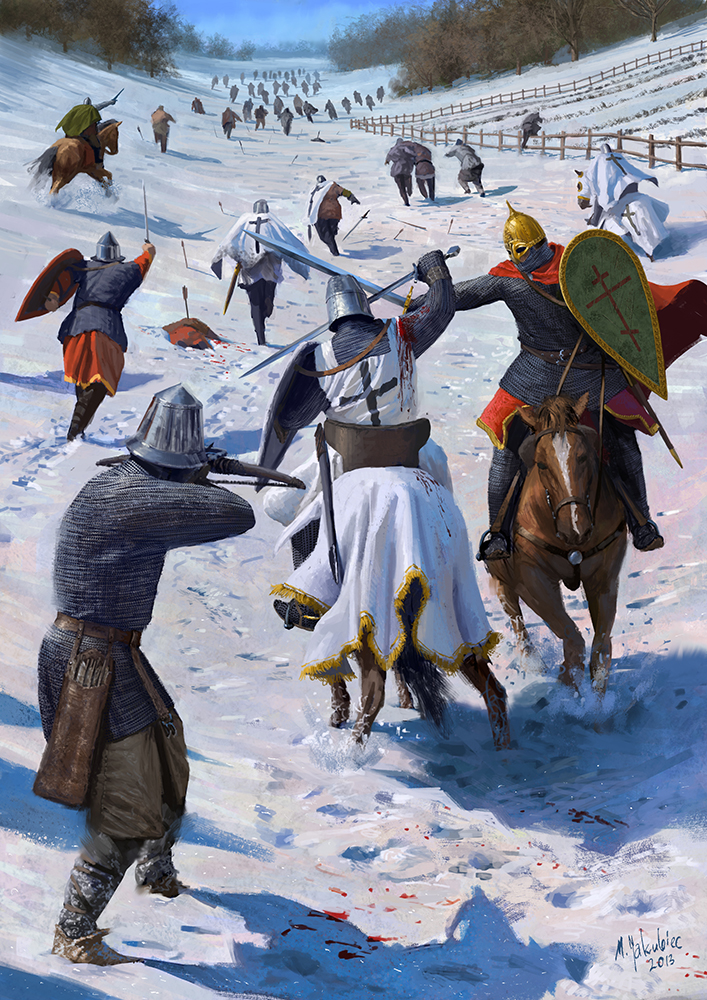
Several years ago I worked at the Tower of London. Spending long periods of time within a building of such age, I would often start to wonder about how the area would have looked before the castle was built. Every morning I would pass the remains of Roman walls at Tower Bridge station, walls that were repaired and refortified by King Alfred the Great in response to the very real threat of Viking raids from the river. Blotting out the great hulk of HMS Belfast, Tower Bridge and the modern office blocks that now crowd the banks, I would try to imagine the awe and the terror that a Londoner would have felt a thousand years ago, standing on the city walls, watching the carved and gilded prows of dragon ships silently gliding up the Thames. Viking fleets and armies raided and besieged the city on numerous occasions, and the river has given up dozens of weapons that might have ended up there as a result of those conflicts.

Continue reading “The Vikings are coming …”

Back to the trenches: Bannockburn and battlefield archaeology on the BBC

This evening BBC Scotlandwill be airing the first part of a new series investigating the Bannockburn battlefield. The series is obviously timed to coincide with interest in the battle arising from the Scottish independence debate and coming referendum, but work to precisely locate the site has been ongoing for some time. The series promises to shine a welcome spotlight on a still emerging branch of archaeology and the challenges associated with locating (and protecting) locations that have a powerful resonance in modern political engagement with the past. If the site of Bannockburn can be identified with  security (and archaeological proof) then it will join the tiny corpus of pre-Civil War battelfields in Britain that can be identified archaeologically, alongside Bosworth (1485) and Towton (1461). The series is presented by Neil Oliver and Dr. Tony Pollard, director of the Centre for Battlefield Archaeology at Glasgow University. The latter’s involvement should ensure that the series is sensible and insightful, and recalls the days when the pair presented the battlefield archaeology programme Two Men in A Trench before Neil Oliver’s ascent to the dizzy pinnacle of archaeo-presenting megastardom.

The website has lots of content, and several entertaining clips of people hitting each other with authentic looking fourteenth century hardware. Excellent.

Journeys in the dark

When I was a small boy – probably I was eight years old – my grand-father gave me a board game for my birthday. This was no ordinary board game, however; this was Heroquest. Opening the box was like opening a portal into another world, like lifting the lid of the Box of Delights. One of the most powerful and evocative smells I know, a smell familiar to anyone who has bought an expensive boxed game over the last twenty-five years, is the unique aroma of plastic and freshly cut card that I first experienced on entering that case of wonders.

Continue reading “Journeys in the dark”

Væsen and the Golden Age of Illustration

I have wanted to share this superb animation for a while. Released in Denmark in 2012, Væsen is a wonderful homage to the Golden Age of illustration and animation, including the early work of the Disney studio – Snow White and Pinnochio in particular. Those films pulled in influences from a number of late nineteenth and early twentieth century illustrators. One artist who worked for the studio in those days, the talented and versatile artist Gustaf Tenggren (1896 – 1970), developed a style that drew heavily on the work of artists like John Bauer and Arthur Rackham (he in fact succeeded John Bauer as the illustrator of Bland tomtar och troll, the Swedish fairy-tale annual). It is a tragedy that he would later destroy many of his fabulous early paintings and go on to pioneer a flat and sterile approach that would dominate in children’s illustration for several decades.

Continue reading “Væsen and the Golden Age of Illustration”